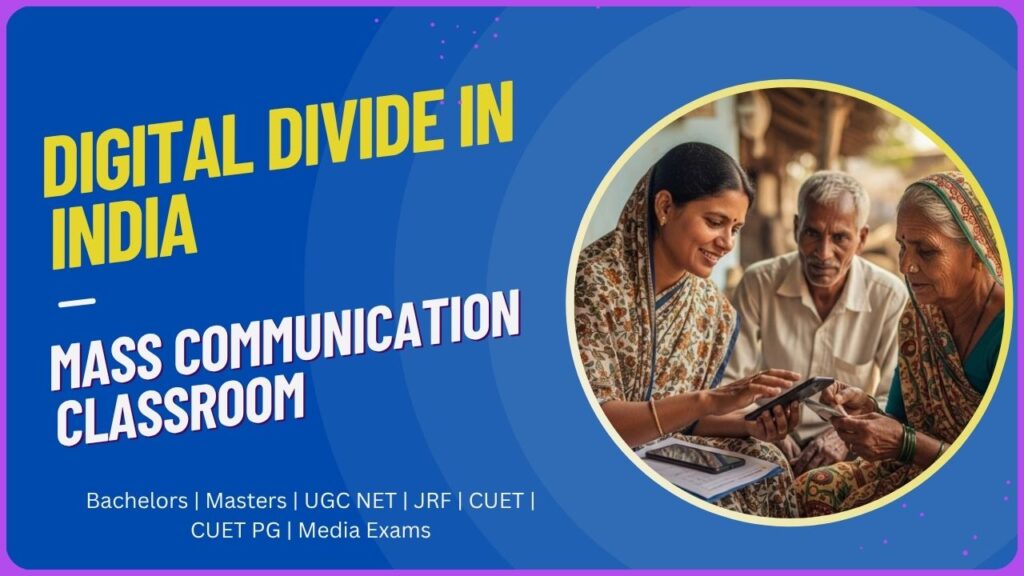
The digital divide refers to the gap between people who have access to digital technologies and the internet and those who do not. It highlights how internet connectivity and usage differ based on geographical regions and socioeconomic statuses.
UNESCO defines the digital divide as the unequal access to ICTs among different populations, highlighting that digitally excluded groups are left behind in a fast-paced world.
In today’s digital world, access to the internet and technology is essential for education, communication, business, and social participation. Therefore, the digital divide creates inequality in opportunities and development.
India faces a major digital divide between:
- Urban and rural areas
- Rich and poor populations
- Educated and less educated groups
Although internet usage has increased due to affordable smartphones and data plans, many villages still lack proper digital infrastructure.
Dimensions of Digital Divide
- Access Divide: Occurs when people completely lack direct access to technology such as computers, smartphones, or internet connectivity. This heavily impacts rural and low-income populations.
- Usage Divide: Happens when individuals possess access to devices and the internet but lack the necessary skills to use them (e.g., elderly people struggling to navigate smartphones).
- Quality Divide: Refers to situations where individuals have devices and skills, but the quality of service is poor, such as slow 2G/3G network speeds or exorbitant data costs.
- Outcome/Benefit Divide: Occurs when socioeconomic barriers prevent individuals from reaping the full benefits of digital access. Sometimes, cultural beliefs or lack of digital literacy lead people to view digital platforms negatively, limiting their potential outcomes.
Causes of Digital Divide
- Economic Disparities: Poverty restricts people from affording electronic devices or data recharges.
- Geographical Factors: Urban centers enjoy strong telecommunication infrastructure, while remote, hilly, or forested areas often suffer from poor or non-existent network coverage.
- Educational Factors: A lack of digital literacy and awareness about different ICT tools restricts proper technology usage.
- Social and Cultural Factors: Restrictions based on caste, class, or gender limit digital access. In many households, women are still discouraged from using mobile phones.
- Linguistic Factors: A majority of digital content and app interfaces are in English, creating a massive barrier for those who do not read or speak the language.
Consequences of Digital Divide
- Educational Inequality: Students without digital access miss out on online resources, leading to a massive learning gap. This was prominently seen during the COVID-19 lockdowns.
- Economic Exclusion: A lack of digital skills hinders employment opportunities and overall economic betterment in a digitizing job market.
- Political Marginalization: Citizens excluded from digital platforms miss out on e-governance services, online voting, and the ability to apply for government welfare schemes.
- Health Disparities: Digitally excluded people are unable to utilize telemedicine, online health consultations, and modern health apps.
- Social Alienation: Those unable to participate in the digital world (often the elderly) can gradually feel disconnected from modern societal conversations and family members.
Measures to Reduce Digital Divide
- Expanding Internet Infrastructure: Improving broadband and mobile connectivity in rural areas.
- Digital Literacy Programs: Teaching people how to use technology effectively.
- Affordable Devices and Internet: Providing low-cost smartphones and internet services.
- Government Initiatives: Programs like Digital India aim to improve digital access.
- Local Language Content: Creating digital content in regional languages.
Government Initiatives in India
To curb the digital divide, the Indian government has introduced several measures:
- Digital India Mission: A foundational initiative with 9 pillars aiming to transform India by providing widespread internet access, digital literacy, and e-governance to citizens.
- BharatNet Project: Aims to provide high-speed broadband connectivity to 2.5 lakh Gram Panchayats across rural areas to boost digital inclusion.
- PMGDISHA (Pradhan Mantri Gramin Digital Saksharta Abhiyaan): A massive campaign focused on imparting digital literacy to rural populations so they can understand and operate digital devices.
- National Policy on Electronics: Promotes the domestic manufacturing of electronic devices to make them cheaper and more accessible to the masses.
- E-Governance and Mobile Apps: Apps like DigiLocker, Umang, MyGov, and Aarogya Setu aim to digitize public service delivery and encourage users to become digitally literate.
Importance of Bridging the Digital Divide
- Improves communication and awareness
- Promotes equal opportunities
- Supports education and employment
- Encourages social inclusion
- Strengthens economic growth
The digital divide is a major challenge in the information age because unequal access to technology creates social and economic inequality. Reducing this divide through infrastructure, education, and affordable technology is essential for inclusive development and digital empowerment.